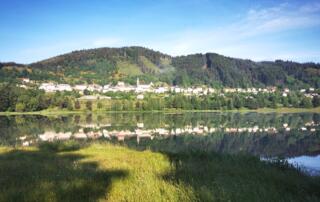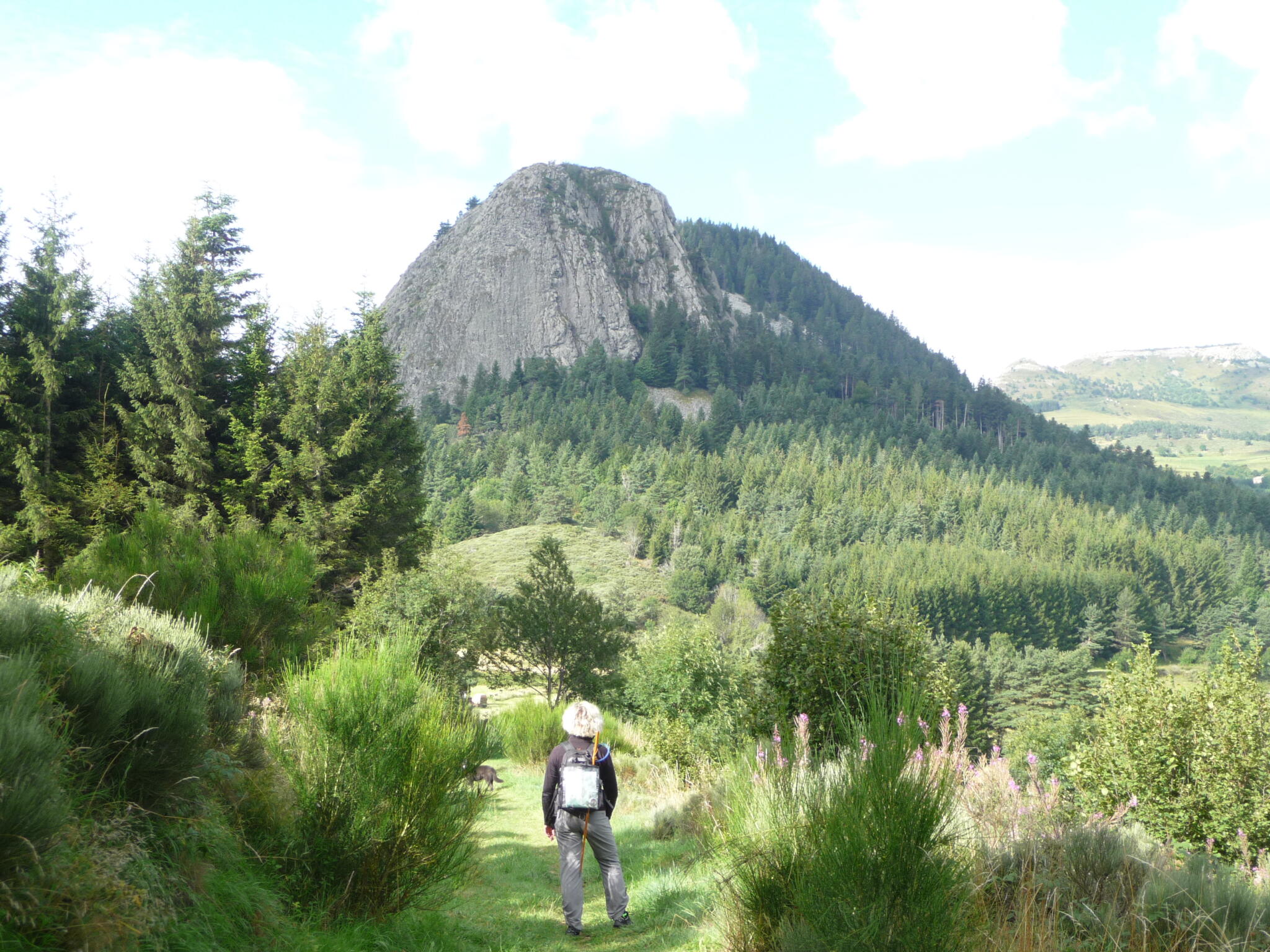
Borée, Ardèche
Opening : All year round daily.
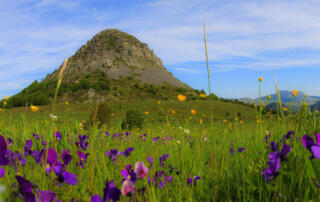
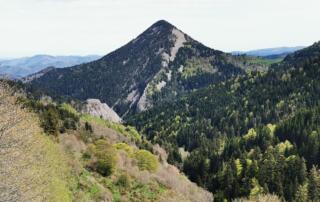
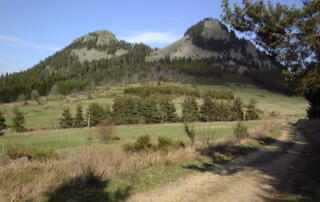
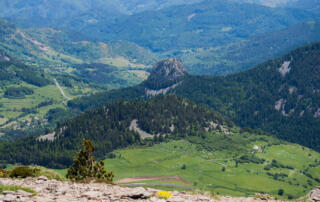
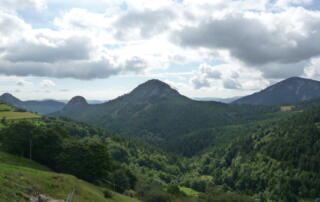
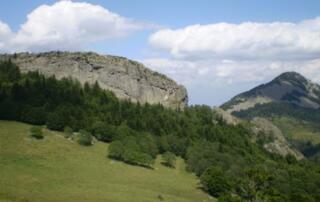
The Gouléïou volcanic bed owes its name to the special site it occupies. "Gouléïou" comes from "goulet", meaning "pass". It is a relief formed of phonolite, a light-coloured volcanic rock enriched with silica.
The lava, emitted at a temperature of 700 to 800°C, was too pasty to spread out and accumulated above its point of emission. Far from matching the usual image of a volcano, with its cone and crater, it was a simple fracture open towards the surface.
The particular conditions that governed the formation of this relief (temperature of the lava at the time of emission, degree of viscosity, speed of ascent to the surface, shape of the feeder pipe) explain its unique shape, which is unparalleled in the surrounding area.
Like all the phonolite reliefs in this sector, Gouléïou must have appeared between 8.5 and 6.5 million years ago, at the end of the construction of the Eastern Velay.
It thus post-dates the great basaltic plateaux of the Saint-Clément type, which the phonolite had to cross via fissures to reach the surface.
The emission of phonolites gave rise to a very dangerous type of eruptive dynamism, known as pelean (from Montagne Pelée in Martinique). The violent explosions that characterise this type of volcanism are linked to the accumulation of gases contained in the magma as it rises. They are the source of the famous "nuées ardentes", avalanches of rocky debris mixed with hot, toxic gases, with devastating effects.
- Parking
- Pets accepted: Unknown
- Pets allowed (supplementary payment): Unknown